The Cowboy Boot as Costume: A Myth About One Fixed Origin
Cowboy boot history becomes clearer when you separate visible design from uncertain origins, and distinguish riding needs, varied forms and popular imagery.
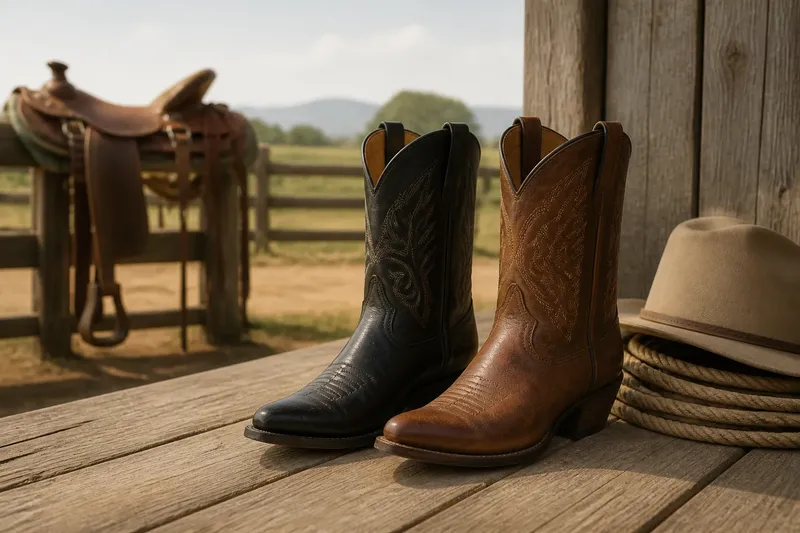
Cowboy boot history is easier to describe when a familiar silhouette is not mistaken for a single invention. The high shaft, shaped heel and pointed toe belong to a broad family of riding footwear, but their combination and meaning have varied across makers, wearers and images.
Why does one origin story sound convincing?
A distinct outline invites a tidy account: one inventor, one town, one decisive moment. That account may be memorable, but a silhouette alone cannot establish where a design began. Footwear can change through makers adapting existing patterns, customers requesting alterations and details circulating between markets.
It also helps to distinguish a boot worn by a working rider from the standard image of a cowboy boot. One is an object shaped by a particular wearer and setting; the other is a cultural emblem, edited for quick recognition. They overlap, but neither tells the whole story of the other.
Without reliable records tied to a particular maker or pair, broad claims about the boot’s exact development should remain cautious. Familiarity is not provenance. A silhouette can tell you what a viewer is likely to recognise, not who first made it or why.
What can the design tell us about riding?
Riding places practical demands on footwear. A raised heel can help keep a boot from slipping through a stirrup, while a relatively smooth sole is less likely to catch than a deeply treaded one. A shaft can cover the lower leg against brush and contact with tack. These are plausible functions, not a universal specification: equipment, riding habits and working conditions differ.
Footwear also has to serve its wearer away from the horse. A person may walk on uneven ground, handle stock or spend time in changing weather. Fit, repairability and the work at hand matter alongside any riding feature. A boot that looks unmistakably Western is not automatically suited to every task.
It is rather like a pocketknife: one object may serve several jobs, but that does not prove which job shaped every detail. The useful question is not whether a feature has one purpose, but what the object and its evidence support in a particular case.
Why do Western boots look different from one another?
There was no single workshop supplying every rider. Western bootmaking drew on wider traditions of riding footwear as well as local trade, materials and customer preference. Makers could vary toe shape, heel profile, shaft height, stitching and construction without following one settled pattern.
That variation matters when comparing boots associated with cattle work, rodeo, ranch life or urban Western wear. Related forms are not necessarily interchangeable. Some pairs favour a riding profile; others make more of ornament or a sharply shaped toe. Appearance alone cannot identify a wearer’s occupation or the conditions in which a pair was used.
When examining a photograph or surviving pair, begin with what is visible: toe, heel, shaft, seams and wear. Then keep any interpretation separate. A photograph can show a particular shape, but it rarely settles questions of construction, comfort, ownership or regional origin.
How did popular imagery shape the cowboy boot?
Illustration, stage performance, film and advertising have helped make a narrow set of Western cues easy to recognise. A pronounced heel, visible shaft stitching or sharply shaped toe can read clearly from a distance. That legibility suits a poster or screen, where an object must identify a character quickly.
Repeated images can make a selected look seem like a uniform. A boot in a performance or film may be cleaner, more ornate or more consistent than everyday footwear because it has a visual job to do. Repetition teaches audiences to recognise that image, but does not establish it as the original or universal form.
Calling a boot costume does not make it false or trivial. It means the object carries public meaning as well as practical use. A contemporary wearer might choose a pair for work, ceremony, fashion or several purposes at once.
What questions help separate use from image?
Did cowboy boots begin with one inventor?
A single inventor is a neat explanation, but the familiar form belongs to broader riding-boot traditions and changing local needs. A particular maker may matter to a specific design without being the sole source of a wider family of forms.
Were pointed toes made only for riding?
Toe shapes vary, and appearance alone cannot establish why a particular shape was chosen. Practical preference, fashion and a maker’s pattern may all be relevant, depending on the pair and the evidence available.
Does ornate stitching mean a boot was for show?
Decoration makes a boot more visually distinctive, but it does not establish the wearer’s occupation or intended use. Ornament can appear on working footwear, while a plain pair can still be part of a deliberate Western outfit.
Can a modern pair be called a cowboy boot?
Yes, when the term describes a recognisable form or cultural association. It does not mean the pair reproduces one historic pattern, so construction details and a maker’s description are more informative than the label alone.
How can you describe a pair without overclaiming?
Separate observations from interpretations. Describe the heel in relation to the sole, the toe shape, the shaft and the visible construction. Then decide what further evidence would support a claim about use, maker or origin.
- Check for a maker’s mark; if it is legible, record the exact wording, then look for corroborating documentation, and otherwise describe the mark as unreadable or absent.
- Check the sole and heel for visible wear; if wear is present, describe its location without assigning a specific job, and if it is not visible, do not infer how often the boots were worn.
- Check the stitching and panels; if they are decorative or structural in appearance, describe what you can see, and avoid treating decoration alone as proof of use.
- Check whether the shaft and toe are visible in a photograph; if either is obscured, mark that feature as unknown, and use another image or the object itself before describing it.
- Check the provenance for a dated record or named owner; if one exists, distinguish what the record says from what the object shows, and if none exists, leave ownership or regional origin unassigned.
- Check any seller or family account against labels, photographs or records; if details agree, report the account as supported by those items, and if they conflict or lack support, attribute the account rather than presenting it as fact.
Say you find a worn pair at a family sale. The starting evidence is a narrow toe, decorative shaft stitching, a partly legible maker’s mark and no written ownership record. You photograph both boots and the mark, transcribe only the letters that can be read, inspect the soles for visible wear, then ask the seller what they know about the pair. The resulting description can report the visible features, quote the seller’s account as an account, and leave the maker’s identity and work history unresolved if the mark and recollection do not settle them.
Keep photographs, labels and any documented family history with the pair. A mark may identify a maker or product line without explaining the design’s full lineage. For cowboy boot history, the useful distinction is between what the object shows and what a record can establish; the gap between them is part of an honest description, not a flaw to be patched with a confident origin story.
What does the boot’s familiar shape represent?
The cowboy boot brings practical associations and public recognition together. Riding needs help explain some recurring features; varied makers and wearers account for differences; popular imagery has made a narrower set of details instantly legible. The result is a recognisable family of objects, not one fixed pattern with a single documented beginning.
When describing a pair, name its visible features first and match historical claims to the evidence available. A label, a photograph and a remembered story answer different questions. Keeping them distinct lets the boot remain both a useful object and a cultural symbol without asking its silhouette to serve as a birth certificate.