A Western-Inspired Table Setting for an Autumn Supper
A Western-inspired table setting can bring autumn texture and regional character to supper while leaving room for plates, serving dishes and conversation.
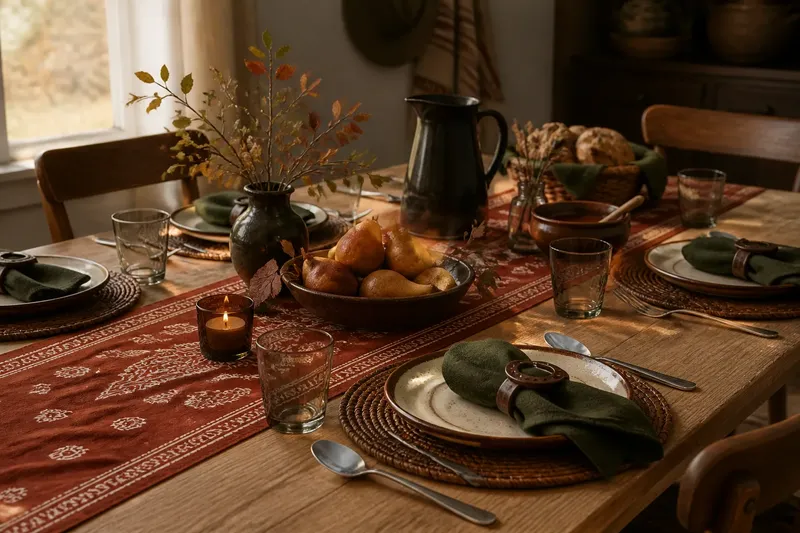
A Western-inspired table setting works best when one recognisable motif does the talking. For an autumn supper, let a small group of woven placemats, a checked cloth or a simple cattle-brand-like graphic set the direction, then keep the rest quiet enough for people to pass the potatoes without conducting a furniture survey.
The aim is not to stage a frontier dining room. It is to make a shared meal feel seasonal and grounded through natural materials, restrained colour and clear space. These choices can be adjusted to the table, the food and the objects already in the cupboard.
1. Choose one motif, not a costume
Start by deciding what single Western reference will anchor the setting. A narrow bandana-pattern runner, a modest horseshoe-shaped napkin ring or a small piece of black-and-white cowhide-patterned fabric can each do the job. Choose one, rather than combining all three with rope, spurs and a miniature saddle. The table is for supper, not an audition.
Consider how the motif reads from across the room. A graphic pattern has stronger visual weight than a plain woven surface, so it usually needs less competition. If you choose a bandana print, for instance, keep napkins solid and let the pattern sit along the centre of the table. If the motif is a small object, such as a modest metal napkin ring, a more noticeable cloth may still feel balanced.
Keep the reference specific but not literal. Western visual language is broad: it can draw on ranch work, regional textiles, leather goods or the geometry of a simple brand mark. A single clue is often more legible than a collection of props. Treat it like a brooch on a plain jacket: it gives the eye somewhere to land without replacing the jacket.
2. Build colour from autumn materials
Use a compact palette that could plausibly sit together in a landscape: warm ivory, tobacco brown, rust, muted olive or charcoal. Choose two or three as the main colours, then allow the food and foliage to supply incidental variation. A natural linen cloth, dark pottery and a small amount of rust-coloured fabric can establish the mood without turning every object into a seasonal decoration.
Texture keeps a restrained palette from looking flat. Pair washed linen with glazed stoneware, or a smooth glass tumbler with a rougher woven mat. The contrast should be tactile rather than busy. A matte ceramic plate beside a polished spoon has enough difference to register; adding several competing finishes can make the setting feel like a materials display.
In an invented situation, say you have a pale oak table, cream plates and dark green napkins. You could add a rust-coloured runner as the sole Western-patterned element and use plain brown stoneware bowls for serving. The expected visible result is a warm, autumnal table with a clear focal line, while the plates and food remain easy to see.
3. Let the table surface do some work
A tablecloth is not compulsory. If the surface has a pleasing grain or a naturally weathered finish, leave most of it visible and use individual placemats or a narrow runner. Bare wood can provide warmth without adding another colour or pattern. On a scratched or very reflective surface, a cloth may be the more comfortable choice; a simple cotton or linen weave will soften the scene without drawing attention away from the place settings.
Choose the covering according to how the table will be used. A runner can define the centre while leaving each diner’s place clear. Placemats create separate landing zones for plates and cutlery. A full cloth gives a more unified field, but can bunch when people pull chairs in or shift serving dishes. For a long shared meal, secure the cloth by arranging it flat and keeping its edges clear of chair arms.
Pattern scale matters. A small repeating print can read as visual texture from a distance, while large checks or bold motifs may dominate a modest table. If the Western motif is already patterned, make the covering plain or use a quiet weave. That preserves the motif’s identity instead of making it negotiate with another pattern.
4. Make place settings comfortable to use
Begin with the objects diners actually need: a dinner plate, cutlery, a napkin and a drinking glass. Add a bowl only if the menu calls for one. Place each setting so it has enough room for elbows and for a serving dish to pass. The precise spacing depends on the table and the number of guests, so arrange the real plates before adding decorative pieces.
Use cloth napkins if they suit the meal, but fold them simply. A loose rectangle beside the plate or a soft fold on top keeps the setting calm and easy to pick up. If you use a ring, choose one that is comfortable to handle and does not snag the fabric. Leather napkin ties can suggest tack or saddlery, but they are not essential; a plain ring in dark metal or wood may be more practical and less theatrical.
Keep glasses stable and accessible. A narrow tumbler or stemmed glass should not sit where a sleeve will catch it during serving. If the table is lively or crowded, sturdy glassware is a sensible choice. The most persuasive styling decision is sometimes the one that prevents a minor domestic plot.
5. Keep the centre low and useful
A centrepiece should leave diners able to see one another and reach the food. Arrange a few low objects along the runner rather than building a tall display at the middle. A shallow bowl of late-season pears, a small ceramic vessel with clipped branches or a modest arrangement of dried grasses can bring in autumn without taking over the table.
Use natural materials sparingly and check how they behave around food. Dry foliage can shed, while scented items may interfere with the meal. Keep candles, if used, in stable holders and away from loose fabric or greenery. A line of small holders can create a gentler glow than a tall candelabra, but leave enough clear surface for serving dishes.
Let the menu influence the arrangement. If the meal will arrive in shared bowls, keep the centre mostly open and move decoration towards the ends. If food is plated in the kitchen, a slightly fuller arrangement may be workable. The useful test is simple: imagine passing the largest dish across the table before deciding where the decorative pieces belong.
6. Mix useful objects with one regional detail
Everyday objects can carry the visual language more convincingly than themed accessories. A dark enamel pitcher, a handmade ceramic serving bowl or a woven basket for bread can provide a material connection to workaday Western interiors without pretending to be heirlooms. Choose objects for their function first, then notice whether their finish, shape or colour supports the setting.
One regional detail can give the table a sense of place: a small woven textile, a locally made bowl or a restrained pattern drawn from familiar ranch-house furnishings. Avoid borrowing symbols without considering their source or meaning. If a design belongs to a specific Indigenous community or cultural practice, do not use it as generic decoration; seek appropriate context and permission where relevant.
Do not force every object into a single story. A practical mix of ceramics, glass and woven fibre looks more natural than a table where every piece appears to have been bought for the same theme. Western style has always included ordinary work and ordinary materials. The supper table need not pretend otherwise.
What should you decide before setting the table?
Which Western motif is easiest to live with?
Choose the motif that can sit beside your existing dishes without demanding matching accessories. A small pattern on a runner is easy to remove after the meal, while a familiar woven mat can return to everyday use.
Can mixed plates still look intentional?
Yes, if they share a colour, finish or general shape. Group the more varied pieces around a plain cloth or runner so the table has a steady visual base.
Should the tablecloth cover the whole table?
Only if it helps the setting and stays out of the way. A bare surface with placemats or a narrow runner can feel more relaxed and leaves room for the wood itself to contribute.
How much decoration belongs in the centre?
Use only what fits alongside the serving plan and leaves sightlines open. If a dish has nowhere to land, the centrepiece is already too large.
7. Edit the table before guests arrive
Set out the plates, glasses and serving pieces first, then look at the whole table from the doorway and from a seated position. Remove any object that blocks conversation, crowds a place or repeats the chosen motif without adding anything. Check that a serving spoon has somewhere to rest and that the pitcher can be lifted without moving a candle.
Finish by adding the food-related details: bread in a basket, a small dish for butter, or a bowl of fruit that can remain on the table after supper. These useful forms bring the arrangement back to its purpose. A Western-inspired table setting does not need to explain itself; one motif, a few honest textures and room for the meal are enough.
For an autumn supper, the strongest choices are usually the ones that still make sense the next morning. Keep the runner, pottery and woven pieces that work in ordinary use, and put away anything that only makes sense under a themed label. The table will feel more considered, and the next meal will start with fewer decorative negotiations.